


Refers to the sale of a security which you do not own. A stock-borrow is secured to cover the delivery of the sale. A short sale is profitable if the price of the security declines, allowing the short-seller to repurchase the securities at the lower price and return the borrow.
In most cases, an investor will take a ‘long’ position in a security – purchasing the shares. This means that they anticipate that its price will rise at some point in the future. Some investors may anticipate that the price of the security they do not already own will fall in the future – and sell the shares. This is known as a ‘short’ position.
Example
An investor may have conducted some fundamental analysis on the price of a stock, ABC PLC for example. Based on this analysis, the investor may decide that the price of ABC is inflated, and anticipate that the price of the stock will fall in the future. The investor, therefore, opens a trading account and sells the 100 units of ABC’s stock at the price of £200, to act on this sentiment. In 6 months’ time, the price of ABC’s stock has fallen to £180. The investor now buys back the ABC stock, closing his or her short position. The investor has therefore made a net profit of £2,000.

In most countries, it is illegal to ‘naked-short’ a security. Naked shorting means selling a security without borrowing it first. Therefore, by law, when short selling a security, the seller must borrow it first. Securities lending is the process which enables short sellers to borrow securities and execute their short sales.
Returning to our ABC PLC example:
The aforementioned ‘short’ investor, when selling shares in ABC on their trading account, is required to borrow the shares from a second investor (a ‘long’ holder). This second investor believes that over the course of the year, ABC stock will rise. The long investor is paid a fee for lending his or her securities to the short seller. In this example, over six months the short investor will pay the long investor as follows based on a lending fee of 2%.
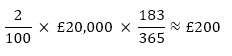
This means over the six months the short investor actually generates a profit of £1,800.

Over the rest of the year, ABC’s stock rallies, with the share price reaching £220. Therefore, the long investor has made £2,200 year to date on their 100 ABC shares when the receipt of lending fees is included in the calculation.

The process of short selling has been proven to increase market liquidity and has similarly proven an essential tool for efficient market price discovery.