

Dictionary
Securities lending explained
General
Short selling
Refers to the sale of a security which you do not own. A stock-borrow is secured to cover the delivery of the sale. A short sale is profitable if the price of the security declines, allowing the short-seller to repurchase the securities at the lower price and return the borrow.
In most cases, an investor will take a ‘long’ position in a security – purchasing the shares. This means that they anticipate that its price will rise at some point in the future. Some investors may anticipate that the price of the security they do not already own will fall in the future – and sell the shares. This is known as a ‘short’ position.
Example
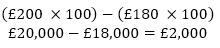
An investor may have conducted some fundamental analysis on the price of a stock, ABC PLC for example. Based on this analysis, the investor may decide that the price of ABC is inflated, and anticipate that the price of the stock will fall in the future. The investor, therefore, opens a trading account and sells the 100 units of ABC’s stock at the price of £200, to act on this sentiment. In 6 months’ time, the price of ABC’s stock has fallen to £180. The investor now buys back the ABC stock, closing his or her short position. The investor has therefore made a net profit of £2,000.
In most countries, it is illegal to ‘naked-short’ a security. Naked shorting means selling a security without borrowing it first. Therefore, by law, when short selling a security, the seller must borrow it first. Securities lending is the process which enables short sellers to borrow securities and execute their short sales.
Returning to our ABC PLC example:
The aforementioned ‘short’ investor, when selling shares in ABC on their trading account, is required to borrow the shares from a second investor (a ‘long’ holder). This second investor believes that over the course of the year, ABC stock will rise. The long investor is paid a fee for lending his or her securities to the short seller. In this example, over six months the short investor will pay the long investor as follows based on a lending fee of 2%.
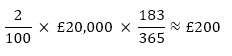
This means over the six months the short investor actually generates a profit of £1,800.
Over the rest of the year, ABC’s stock rallies, with the share price reaching £220. Therefore, the long investor has made £2,200 year to date on their 100 ABC shares when the receipt of lending fees is included in the calculation.

The process of short selling has been proven to increase market liquidity and has similarly proven an essential tool for efficient market price discovery.
Corporate events
Corporate events (CEs), are events initiated by public companies that change the status of the securities issued by said company.
A corporate event is typically agreed upon by a company’s board of directors and then authorised by the company’s shareholders. Common examples of corporate events include stock splits, dividends, and mergers and acquisitions.
There are three categories of corporate events:
- Mandatory corporate event (MCE): These affect all shareholders. An example of a mandatory corporate event is a cash dividend.
- Voluntary corporate event (VCE): As the name suggests, a VCE is an event where the shareholders elect to participate. An example of a voluntary corporate event is a tender offer.
- Mandatory with choice corporate event: This type of corporate event is similar to a mandatory corporate event in that it affects all shareholders. However, in this case, shareholders are given a chance to choose from several options. An example of a mandatory with choice corporate event is a cash or stock dividend option. Here, one of the options is chosen by default, in case the shareholder does not make an election.
Whilst your security is on loan, you forgo your right to vote (at Company meetings – AGMs/EGMs), however you still retain the right to elect on any relevant corporate events. Similarly, you still retain the right to receive all dividend entitlements on securities that are lent. Dividend payments on loaned securities are known as manufactured payments (or substitute payments in the US). Withholding tax liabilities on manufactured dividends (substitute payments) should be discussed with an independent tax advisor. Sharegain is committed to ensuring complete transparency for its clients and this includes transparency regarding corporate events. From your Sharegain dashboard, you will receive notifications about corporate events whilst your securities are on loan, thus allowing you to recall your securities should you so wish.
Beta
In finance, the beta (β) indicates whether an investment is more – or less – volatile than the market as a whole. In other words, beta is a measure of the risk arising from exposure to general market movements, and this is also known as the systematic risk.
Beta is used to assess and compare the amount of risk an investment adds to an already diversified portfolio. This means it is an important metric for measuring the risk exposure across investment strategies when that risk cannot be reduced through diversification.
A portfolio of all investable assets within the market has a beta of exactly one. A beta of less than one is indicative of either an investment with lower volatility than the market e.g. a government bond or else an investment with high volatility, whose price movements are not highly correlated with the market e.g. gold. A negative beta describes an investment that tends to increase in price when the general market price falls and vice versa. Securities Lending is an example of an investment strategy which has a negative beta. This is because, as the returns available from the market fall, lending rates will generally rise.
Alpha
Alpha (α) is a term which describes returns from investments over and above a particular predefined benchmark.
By adopting an active investment management strategy (that is, investing in a manner which does not merely track a benchmark), you aim to beat a benchmark. As an investment manager, you will often be benchmarking your performance against an index like the FTSE 100.
For example, by actively investing you generate 8% returns this year. Assume you’re benchmarking yourself against the FTSE 100. If the FTSE 100 were to generate 3% in the same year, then your alpha would be 5%.
Securities lending is an example of an alpha-generating strategy. Lending your securities, whether your investment strategy is active or passive, will allow you to outperform the benchmark. Securities lending is a major reason why some passive investment funds are able to outperform the benchmark they are tracking.
Alpha is used in finance to measure the performance of investment managers and is one of five popular technical risk ratios intended to help investors assess the risk-reward of strategies.
Legals
SLAA
SLAA stands for Securities Lending Authorisation Agreement. This is an agreement used by agent lenders. An SLAA is the only contract you will need to sign with Sharegain. By signing this agreement, you are authorising Sharegain, on your behalf, to arrange the terms of each loan of securities with the relevant borrower(s).
GMSLA
GMSLA stands for Global Master Securities Lending Agreement.
You are added as a principal lender to an industry standard GMSLA with each borrower, which Sharegain will have already signed, as the agent. The GMSLA governs the management of each loan lifecycle, as well as the rights and obligations of the lender/borrower during that lifecycle.
CMMA
CMMA stands for Collateral Management Master Agreement.
You are added to the CMMA of the Triparty collateral manager, which Sharegain have already signed as agent. The CMMA governs the management of collateral, the rights and obligations of the collateral receiver, the collateral provider and the collateral manager.
Types of loan
Term loan
A term loan in securities lending is a type of loan in which there is a specified end date and the lender forgoes the right to request a recall. Often, borrowers are willing to pay a premium for this type of loan.
Open-end loan
An open-ended loan in securities lending is a loan where there is no agreed upon end date. Termination only occurs when either you recall your securities or the borrower returns them. This is the most common form of securities lending arrangement, making up 83% of loans according to the International Securities Lending Association (ISLA) – the leading industry association for the securities lending market.
Hold loan
A hold loan in securities lending is a type of loan in which a borrower ‘reserves’ a holding of your securities without them leaving your custody account, and pays you a fee. Equally, since the securities will remain in your custody, the borrower will not post collateral.
Why would a borrower want to do this?
A borrower may opt for a hold loan opposed to a conventional loan if, for example, they anticipate that in the near term they will want to use the security for a trade. By placing a hold loan, they can ‘activate’ the loan when they see fit. At this point, the security and collateral would be transferred between the respective parties. With a ‘Hold’ the fee is still paid, yet it removes any collateral obligation on the borrower.
Market participants
Lender
A Lender (or more specifically a beneficial owner) is an owner of stocks, bonds, and ETFs who is willing to loan their securities to a borrower. In return for lending your securities, you will receive a lending fee for every day the security is on loan. Each loan is secured by the provision of collateral by the borrower.
Lenders rarely view securities lending as a priority when making investment decisions, but rather as a method to enhance their returns. Most lenders can expect to earn between 1 and 40bps across their portfolio, depending on the demand for your securities from borrowers and the number of your securities you wish to lend.
Until now, many beneficial owners were unable to benefit from securities lending, shutout by high barriers to entry. If you were fortunate enough to be a participant, you either had to invest considerable time and money in doing it yourself or hand over control and responsibility for risk management to someone else. The problem is, without having sufficient control or transparency, how would you ever ensure you received a fair deal? Sharegain has reinvented securities lending, making it accessible to all investors by focusing on simplicity, automation, and seamless integration.
Borrower
A securities lending borrower is an investor or firm which is borrowing a security.
The most common borrowers of securities are broker-dealers, hedge funds and portfolio managers.
There are many reasons why a borrower would want to borrow a security. These include:
Market making – Some borrowers have agreements to “make markets” in certain securities. This means they are required to be ready to buy and sell these securities for their clients (and on behalf of the company themselves) at any time, so maintaining market liquidity. Consequently, they are required to hold pools of assets that they do not always own – often they need to borrow them. This is how securities lending began in the 1960s.
Short selling (Directional investing) – Is the process of selling a security which you do not own.
Financing – To raise short-term capital (cash) and finance other activities, some institutions borrow securities to sell them or lend them to re-invest the associated cash collateral.
Balance sheet trades – many regulators require banks and other institutions to adhere to liquidity ratios. Liquidity ratios measure a banks ability to pay debt obligations and their margin of safety should default occur. In order to pass stress tests, some institutions borrow securities to ‘boost’ their balance sheets.
Arbitrage – Is the practice of taking advantage of a price difference between two or more markets: striking a combination of matching deals that capitalise upon the imbalance, the profit being the difference between the market prices.
Timely settlement (fails mitigation)– Conventionally, securities are transferred to a buyer two business days after a sale is agreed. If the securities are going to arrive late for any reason, borrowing can be a way to ensure timely delivery.
Hedging – A hedge is an investment to reduce the risk of adverse price movements in an asset (i.e. opposite to your position). Normally, a hedge consists of taking an offsetting position, e.g. going short in one security and long in a related security. Hedging techniques are also widely utilised by banks and brokers in the creation of derivative transactions, in order to offset any exposure created by the creation of the derivative contract, by purchasing or selling the security against which the contract has been created.
Lending Agent
Securities lending agents facilitate securities lending transactions by offering your available securities to borrowers, that is, the fully-paid securities you hold in your portfolio. Some custodians offer this service for the securities under their custody, but there are also independent firms who specialise in lending securities on your behalf. These specialist firms are called agent lenders.
Sharegain has reinvented the agent lender model by developing the world’s first Digital Agent Lender (DAL). The DAL is a fully-automated and transparent securities lending solution. Sharegain’s founder and CEO, Boaz Yaari, worked in capital markets for many years. During this time, he discovered that the securities lending industry was largely dominated by a relatively small number of incumbent institutions. In many cases, investors have been unable to benefit from this practice because they were either tied to the decisions of their custodian or shutout by high barriers to entry. If you were fortunate enough to be on the inside of the ecosystem, you either had to invest considerable time and money in doing it yourself or hand significant control and responsibility for risk management and transparency to someone else. The problem is, without control or transparency how can you ensure best execution? With Sharegain, there is no need to outsource your securities lending programme and in doing so relinquish control and transparency. We help you automate lending activity, whilst allowing you to maintain control without having to divert your focus from portfolio allocation and investment-making decisions. Also in accordance with transparency, Sharegain’s fee structure is very simple – if you don’t lend, you don’t pay. Our revenues are tied exclusively to the lending fees your portfolio generates – and neither does our solution prohibit the use of other agents.Collateral
Rebate rate
The securities lending rebate rate is the interest the lender pays to the borrower when cash is used as collateral and this cash is reinvested.
When a lender reinvests the cash used as collateral, an agreed upon proportion of the reinvestment return (or interest) is paid to the borrower, this is called the rebate rate.
Cash-collateral reinvestment
Margin
In securities lending, the margin is the difference between the actual market value of a loaned asset and the value assigned to the asset for collateral purposes. The size of the margin reflects the perceived risk of a fall in the value of the collateral utilised to cover the loan exposure. The larger the perceived risk, the higher the collateral margin.
RQV
RQV stands for Required Value. The RQV is the value of collateral you require to be posted to the account in your name at the tri-party collateral manager by the borrower, to cover the outstanding exposure on the active loans with them. Collateral margins are set by Sharegain at a minimum of 105% the value of the loan. Loans and collateral are monitored in real time and, at a minimum, are marked to market daily (an accounting practice that involves recording the value of an asset to reflect its current market value – or previous days closing price when considered in the context of securities lending).
Pre-pay
All Collateral is posted on a ‘pre-pay’ basis, meaning delivery of loaned securities to the borrower will only occur once collateral has been confirmed, allocated, and settled in the lenders account by the collateral manager.
HQLA
HQLA stands for High-Quality Liquid Assets.
Sharegain only accepts HQLA as collateral, the constituents of which have been published within ESMA guidelines on the subject, and is commonly accepted as the most secure form of collateral.
Non-cash collateral
The asset used as collateral is not cash, but instead, it is a security. In most cases, this security is a form of government or corporate debt or equities.
Collateral
Securities lending Collateral is an asset, cash or non-cash, that a borrower places as security for repayment of a loan, to be forfeited in the event of a default or failure to return or repay the loan.
Default
The primary risk in the majority of securities lending programmes is the risk of default by the borrower. Defaults are extremely rare, but they do happen. The most notable from a securities lending perspective were those of Bear Stearns and Lehman Brothers. In the rare case that a default occurs with one of your borrowers, you are protected by the provision of collateral, which the borrower posts prior to the transfer of your securities.
On loan
Lendable value
The lendable value of your portfolio is the proportion which can be lent under your securities lending agreement. A varied portfolio will contain a broad range of different types of investments. Some of these investments would not be included in your lendable portfolio, simply because they are not defined as securities in a standard lending programme. These would include investments like closed-end funds or commodities. In addition, there are a number of securities which are not lendable. Securities may be non-lendable for a number of reasons including, but not limited to; a lack of liquidity, a lack of demand or the security not being listed. For example, not every type of bond is lendable. Examples of bonds which you would not be able to lend include:
- Bankers Acceptance
- Covered Bond
- Certificate of Deposit
- Cash Management Bill
- Commercial Paper
- Capital Securities
- Certificate
- Discount Notes
- Permanent Interest-Bearing Shares
- Reference Bills
- Structured Product
- Strip Package
Sharegains
Return
A borrower uses the ‘Return’ functionality to terminate a loan and return your securities to you. A borrower might choose to return all or some (known as a partial return) of the securities on loan. In the instance where a lender wants to terminate a loan, they would use the recall feature.
Recall
A securities lending ‘Recall’ refers to a request by the lender to the borrower to return the loaned securities. In a securities lending trade, the lender has the right to request a recall at any time, unless the loan is -on term (which can technically be recalled, however there may be financial penalties for doing so).
If you like control, you’ll love Sharegain
As a Sharegain lender, you can recall any and all of your securities whenever you want, from your dashboard with just a click of a button.
Value on loan
The value on loan is the total value of all securities, or of a single security, on loan on the quoted day. It is a common measure for the size of the industry.
Re-rate
A securities loan is re-rated when, whilst out on loan, you agree with the borrower to revise the previously agreed lending rate. The revision may be up or down – and the loan will accrue at the new rate from the agreed rerate date, there is no retrospective revision of entitlement received.